
Virginia Schools Need an IAQ Assessment: How to Get It Done and Fund What Comes Next
By Chrissy Sherriff · CEG Solutions
The short version: most districts are still planning and budgeting for the indoor air quality assessment itself, and the money to act on what it finds may not exist yet either. One coordinated procurement can create a path through both: assess IAQ and HVAC across buildings, scope and prioritize the work, and identify a funding strategy that can use energy and operational savings to help pay for the improvements.
Across Virginia schools, the indoor air quality requirement is on the calendar, but many divisions are still figuring out how to budget for the assessment, identify the right resources, and determine what happens after the findings are in.
Some districts have already completed ventilation or IAQ studies, but many have not. Either way, the challenge extends beyond producing a report. An assessment can identify where ventilation, controls, filtration, or HVAC systems need attention. The next question is how to turn those findings into a prioritized, fundable plan without forcing every improvement into its own capital request.
A real need competing for limited capital
Air quality reaches straight into the outcomes leaders already track: the EPA attributes roughly 14 million missed school days a year to asthma, and raising classroom ventilation rates can improve performance on schoolwork by around 8 percent.
None of this is news to the people who run school buildings. Facilities teams have managed these issues for years. What is changing is the urgency to document conditions, plan improvements, and fit the work into budgets that are already stretched:
● The federal relief that paid for the first wave of ventilation work has run out; districts had to commit those ESSER dollars by the end of September 2024, with no dedicated replacement behind them.
● Meanwhile the buildings keep aging. 52% of Virginia’s public school buildings are at least 50 years old, the age at which HVAC, electrical, and plumbing systems reach the end of their useful lives.
● And because Virginia covers only about 10% of school construction costs – against a national average near 22 percent – most of that weight lands on the division and its locality.
That leaves many divisions with two funding challenges at once: paying for the assessment and finding capital for the improvements it recommends.
One procurement can connect the assessment to the funding plan
Instead of treating the IAQ assessment as one procurement and each resulting HVAC need as a future capital request, districts can use a comprehensive energy audit or technical energy study to look across buildings and systems in one coordinated process. That creates a path from assessment to prioritized scope to funding strategy:
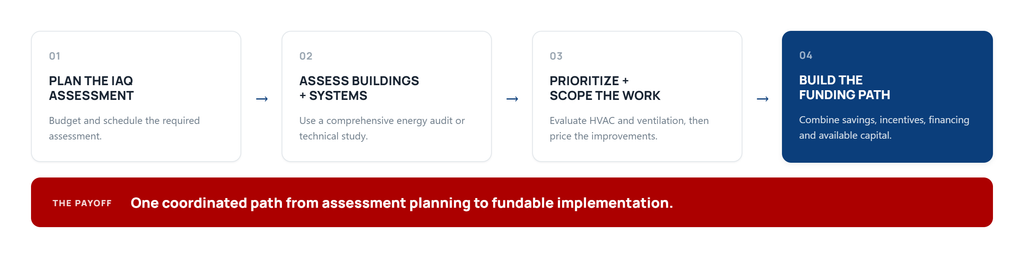
The detailed engineering study that scopes and prices the work building by building is what’s known as an Investment Grade Audit, or IGA.
In a performance-based project, the IGA can take the broader assessment into detailed engineering and implementation planning. Because the study is also identifying energy and operational savings opportunities, HVAC and ventilation measures that affect IAQ can be evaluated within the same process rather than waiting for a separate project and funding cycle. The IGA is not a free assessment; its cost is typically built into the resulting project, or handled as a defined fee if the division chooses not to proceed.
For a superintendent or assistant superintendent sequencing years of deferred work against a tight budget, that consolidation is the point. One coordinated process can answer the questions districts are facing from the outset: what needs to be assessed, what should be prioritized, what it will cost, and how the work could be funded.
How savings can help fund the work
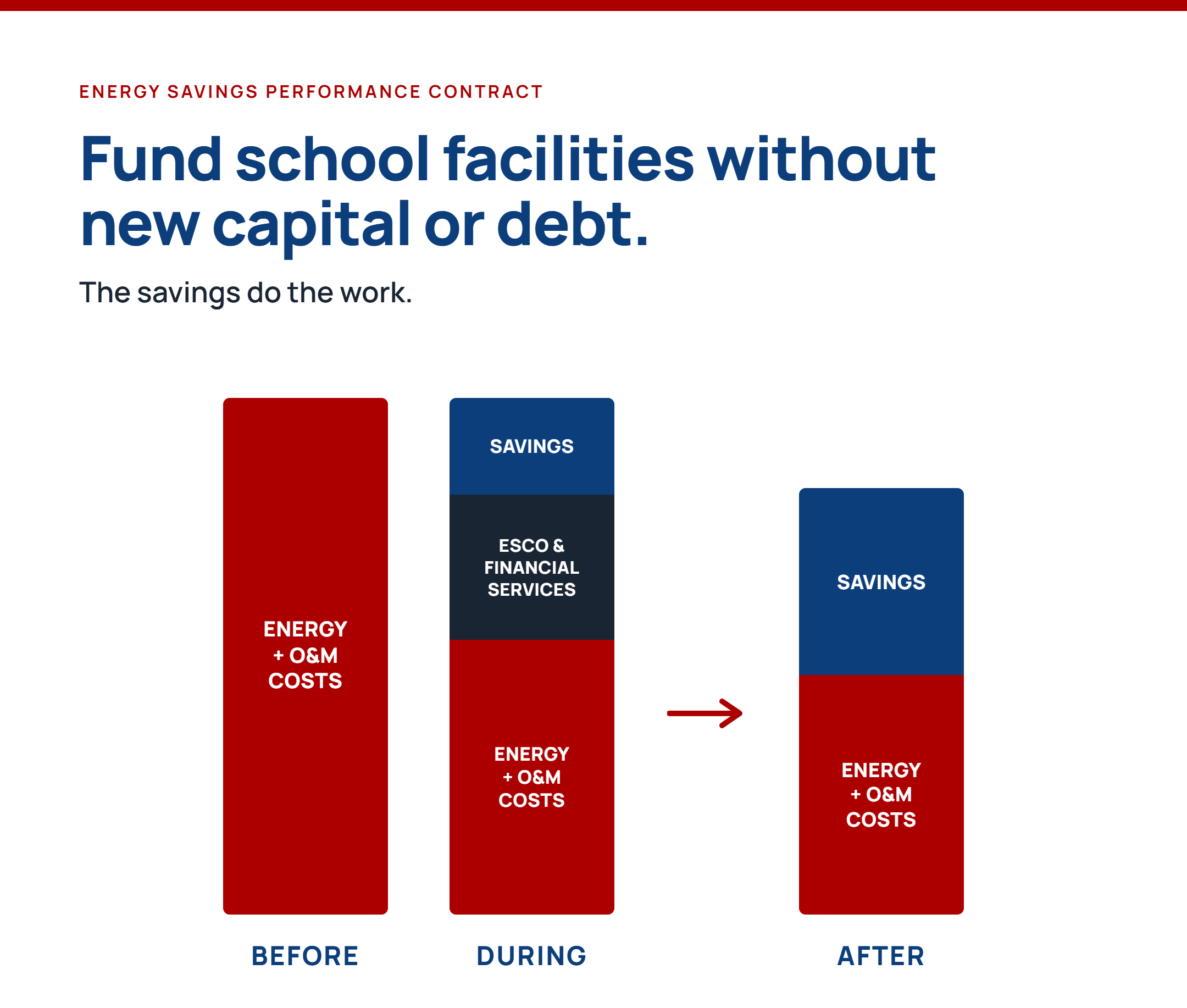
The funding starts with money the division is already spending. Energy is the second-largest operating expense in K-12, more than $8 billion a year nationwide, and more than 30% of it is wasted.
That is where performance contracting can become relevant. Rather than requiring a district to fund the entire scope up front, an energy savings performance contract enables upgrades to be paid for over time by the energy and operational savings that the upgrades themselves generate. Those savings are guaranteed, so if they fall short, the contractor covers the difference rather than the district.
Savings are rarely the whole story, though, and they do not have to be. Projects can also layer guaranteed savings with available grants and incentives and the right financing structure, helping a district reach a broader scope of work without fronting the full capital cost.
What this can look like in practice
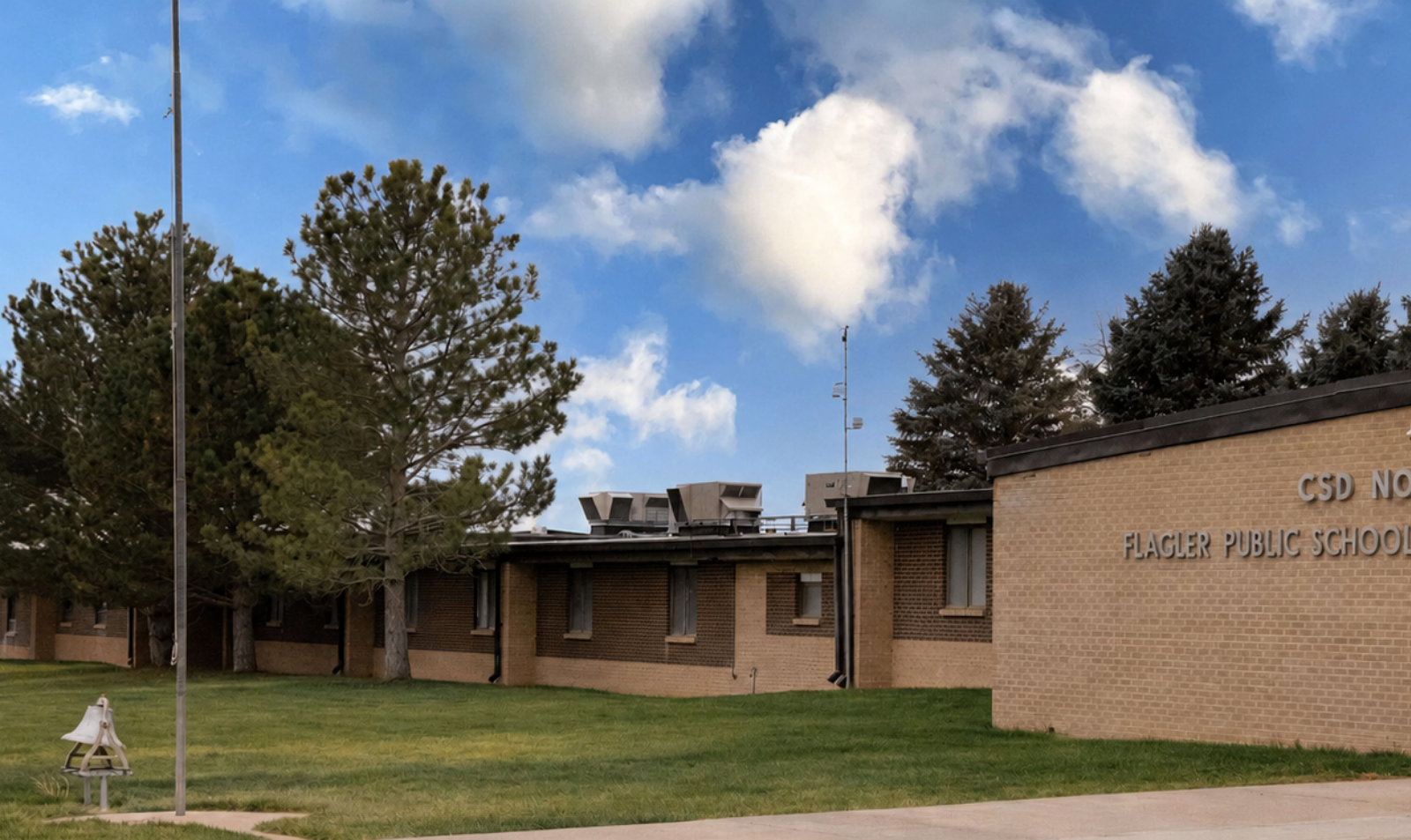
This is not hypothetical. A small rural K-12 district recently modernized an aging campus it could not have funded on capital alone. Working with CEG, it built a district-wide facility plan and combined available grant funding, capital reserves, and performance-based financing into a single structure that carried the whole project: a $5.5 million modernization of a 75,000-square-foot campus covering HVAC and ventilation, electrical, accessibility and safety upgrades, and a range of other building improvements.
Air quality improved as part of the same effort, not as a separate line item the district had to fund on its own.
From assessment to funded action
For districts still planning the IAQ assessment, the goal is not simply to produce a report. It is to build a path from assessment to implementation. If your division is budgeting for the assessment now, it may be worth exploring whether a broader energy and facility study can address the immediate requirement while also identifying a practical funding strategy for what comes next.
Related Posts

By Will Benish, CEG-Iconergy The plan already exists. Here is how Colorado local governments put the projects they…

In energy-intensive segments like food processing, energy costs can account for 15 to 30 percent of total operating expenses. The challenge isn’t awareness….

59% of Students Say Sustainability Affects Where They Apply. Where Does Your Campus Rank? Survey data is reshaping how…


